
For years, “storage in Bangalore” meant one of two things: a relative’s spare room or a shared godown somewhere on the outskirts of the city with no real accountability for what happened to your belongings.
That’s changed significantly. Here’s what’s actually different about professional storage services in Bangalore in 2026 and what still separates good providers from average ones.
What’s Changed: The Shift From Warehousing to Managed Storage
The core shift isn’t just technological. It’s operational.
Traditional warehousing in Bangalore treated storage as a passive service: you drop things off, they sit in a unit, you collect them eventually. The facility’s job was to not lose your belongings. That was roughly the standard.
Modern storage services have moved toward an active model. The provider manages the entire process: pickup from your home, Grade A quality packing, organised storage in private lockable units, inventory management, and drop back on request. The customer’s involvement is minimal by design.
This is a meaningful difference, especially for households and working professionals who don’t have the time, labour, or transport to manage storage logistics themselves.
The 5 Biggest Improvements in Bangalore Storage Services (2026)
1. Valet Pickup and Drop Logistics Handled End to End
The most significant practical improvement is that leading storage providers now handle the entire logistics chain.
Previously, using a storage facility meant arranging your own movers, transporting items yourself, and coordinating the same process in reverse when you needed things back. This made storage more effort than it was worth for many households.
Valet pickup and drop service has removed that friction entirely. You schedule a pickup, the team arrives at your home, handles packing and loading, and drops everything back when you need it whether that’s a single item or a full household.
Why it matters: Most people who haven’t used professional storage before assume logistics is their problem. With a proper valet service, it isn’t.
2. Inventory Management You Know Exactly What’s Where
Arguably the most underrated improvement in household storage is the move to digital inventory management.
Every item is tagged, photographed, and logged before it goes into storage. Customers can view their inventory and request specific items: a document, an appliance, a box of files without retrieving everything at once.
This matters significantly for long-term storage. If you’re storing 40 boxes during a 12-month stint abroad and need a specific document in month seven, a proper inventory management system means that box is located and retrieved without touching the other 39.
Why it matters: Storage without inventory management is just hoping you remember what you packed and where it is. With it, retrieval becomes a precise, low-effort process.
3. Grade A Quality Packing & Handling Damage at the Source
Most storage damage doesn’t happen in the unit. It happens during transit in the loading, the shifting, and the unloading.
The move toward Grade A quality packing as a standard (not an add-on) has significantly reduced handling damage for furniture, appliances, and household goods. Three-layer packing bubble wrap, stretch wrap, furniture blankets means items arrive and leave storage in the same condition they were collected in.
Why it matters: A scratched dining table or a broken sofa leg isn’t a storage problem. It’s a packing and handling problem. Solving it at that level protects items far more effectively than any facility feature.
4. Private Lockable Units Your Space, Not a Shared Room
Older warehousing models stored customer items in shared spaces. Your furniture sat alongside other people’s boxes in a common area, with no clear separation or controlled access.
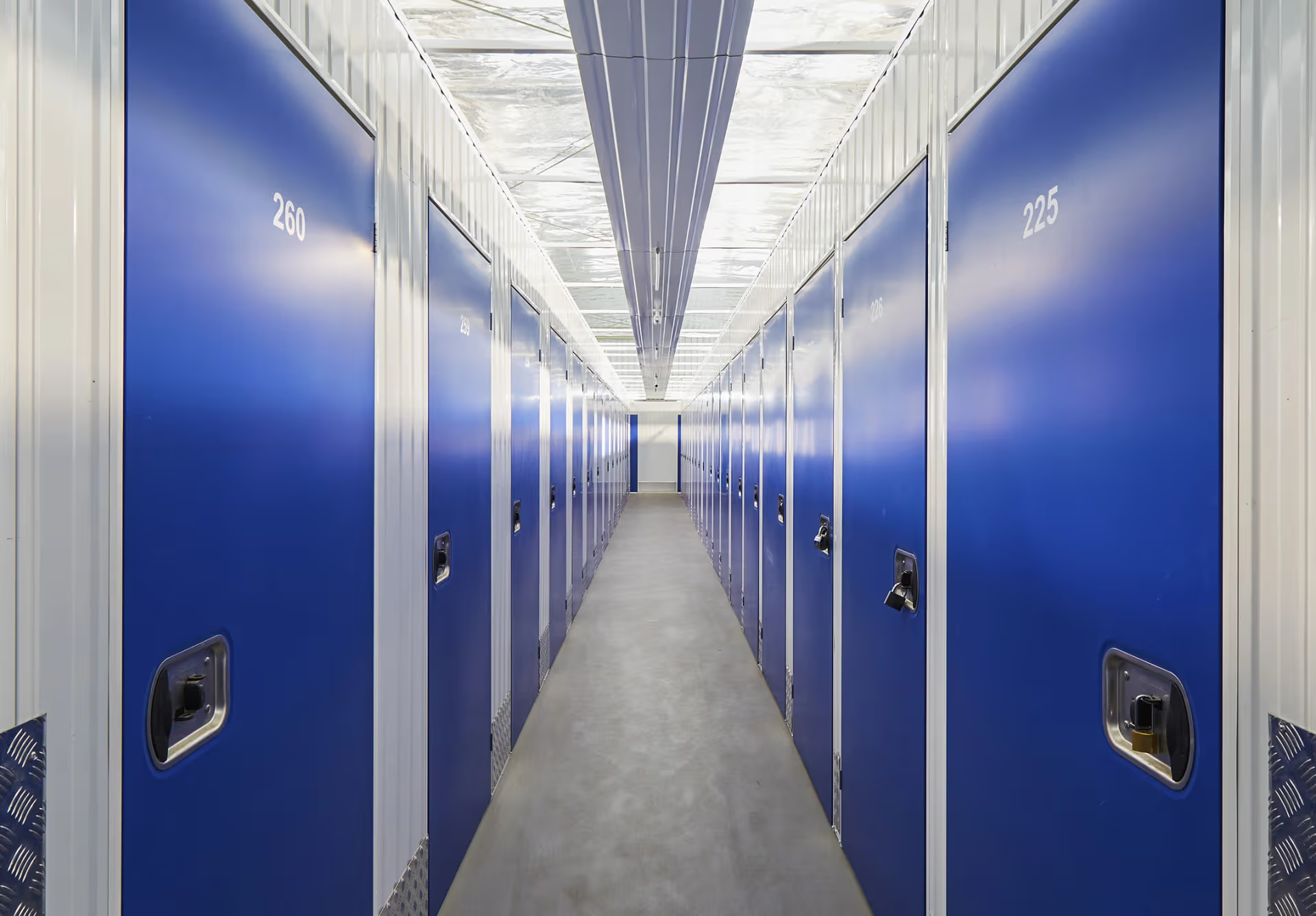
Private lockable units have become the standard for professional storage providers. Each customer’s belongings are stored in their own designated unit with biometric access control and 24/7 CCTV surveillance. Nobody else’s inventory is in your space.
Why it matters: Shared storage creates accountability gaps. Private lockable units ensure that if something is missing or damaged, there’s a clear chain of responsibility.
5. Flexible Monthly Plans No Lock-In Commitments
Storage needs are rarely predictable. A renovation that was supposed to take six weeks runs to four months. An international assignment extends beyond the original timeline. A home purchase is delayed by a quarter.
Flexible month-to-month billing without lock-in periods means customers pay for exactly the duration they need. This is now an expectation, not a premium feature, among reputable storage providers in Bangalore.
Why it matters: Long-term contracts transfer the risk of changing circumstances from the provider to the customer. Flexible plans keep that risk where it belongs.
What Hasn’t Changed and Still Matters
Despite the operational improvements, a few fundamentals remain unchanged in what separates good storage from bad storage:
Pest, rodent, and termite control is still non-negotiable. A well-managed facility treats this as a recurring operational responsibility, not an afterthought.
Facility cleanliness and maintenance still directly affect the condition of stored items. A clean, well-organised storage environment preserves belongings better than any technology feature.
Transparency in pricing still varies widely. The best providers give you a clear breakdown before anything is collected, not a vague “per unit” estimate that looks different on the final bill.
Who’s Benefiting Most From These Changes
The improvements in Bangalore’s storage services in 2026 are most visible for:
- Working professionals relocating temporarily who need furniture and household goods stored for 6–18 months without logistical burden
- Families mid-renovation who need items moved out safely without coordinating separate packers and movers
- Residents downsizing who want a transition period before deciding what to keep permanently
- Small businesses and e-commerce sellers managing inventory without leasing warehouse space
- NRIs and frequent travellers who need reliable long-term storage with partial retrieval flexibility
Frequently Asked Questions
What’s the biggest difference between storage services in Bangalore now versus five years ago?
The shift from passive warehousing to active managed storage. Today’s leading providers handle pickup, packing, inventory management, and drop back so customers don’t have to manage any of the logistics themselves.
Do all storage providers in Bangalore offer valet pickup?
No. Some still require customers to arrange their own transport to the facility. It’s worth confirming whether valet pickup and drop is included before booking.
How does inventory management work in modern storage facilities?
Items are tagged, photographed, and logged into a digital system before storage. Customers can view their inventory and request specific items to be retrieved and dropped back without collecting everything at once.
Is flexible month-to-month storage available in Bangalore?
Yes. Space Valet offers monthly billing with no lock-in period, making it practical for both short-term needs (6–8 weeks during renovation) and longer transitions (12–18 months abroad).
What should I look for to avoid storage damage?
Ask specifically about packing standards. Grade A quality packing three-layer wrapping for furniture and fragile items is the most reliable protection against handling damage during pickup and drop.
The gap between professional storage services and local godowns in Bangalore has widened considerably. The difference is no longer just security, it’s the entire experience, from the first pickup to the final drop back.
Need household or furniture storage in Bangalore? Space Valet combines valet pickup and drop, Grade A quality packing, private lockable units, and digital inventory management with no lock-in period.
Store Secure. Store Smart. Store with Space Valet Get a Quote Today →